

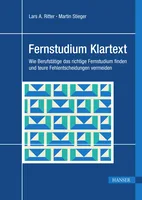


If you are looking for an online audio engineering course, you will quickly find dozens of offers, from two-hour video tutorials to multi-year diplomas. Only a few of them are genuinely comparable. I have laid five providers side by side that promise real training in the German-speaking market and rated them against the same criteria. One open remark first: I did my own audio engineering training with one of these providers and today I teach on the bachelor's programme that follows it. That does not make me neutral, but I know at least one of these courses from the inside and know what matters when you learn at your own desk.
My own online audio engineering course: how it all started
Before I became a study counsellor, I was one of those people who sit at the computer in the evening trying to work out why their own mix does not sound like the record on the shelf. I had no Abitur or Matura, so a degree seemed out of reach. The HOFA distance course was at first simply an attempt to learn a hobby properly.
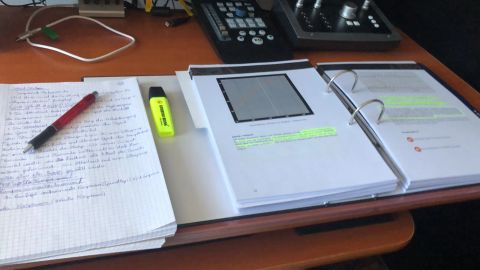
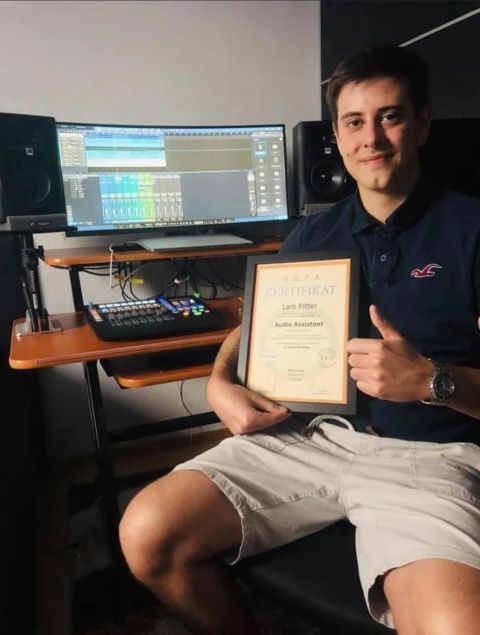
It became more than that. Through the HOFA Audio Diploma I was able to start a bachelor's programme directly, without Abitur or Matura. Looking back, this distance course was the beginning of my academic career, which has now reached an ongoing doctorate. And because everything ran online, I was able to work in parallel the whole time. Exactly this model, learning alongside a job, is what I advise others on today.
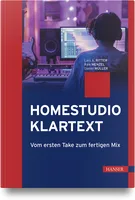
I learned an enormous amount, about the craft and about organising yourself alongside work. And I met people who are still part of my life today. One of them is Raik Menzel, with whom I recently wrote the book Homestudio Klartext. The fact that we now write together about recording and mixing started during this training.
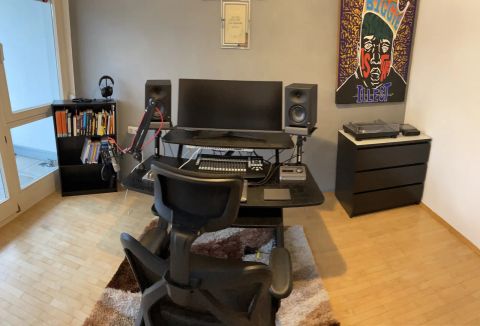
The criteria I use to rate online audio engineering courses
You do not learn audio engineering by watching. You learn it by mixing, having the result taken apart by someone with trained ears, and doing it again. So I do not weigh by gloss but by six points:
- Scope and depth: Does the course cover only the basics, or also mastering, live sound, film sound and acoustics?
- Feedback on your own work: How often do you get a real analysis of your mixes, not just a multiple-choice test?
- Online flexibility: Can you learn entirely from home, or do you need on-site days?
- Quality check: Is the course approved by Germany's Central Office for Distance Learning (ZFU)? In Germany this is mandatory for distance learning with tutoring and progress checks, and it reviews teaching and fair contracts. What the law behind it regulates is on my page about the Distance Learning Protection Act.
- Progression: Is there a route onward, for instance to a bachelor's degree?
- Price: What does the training cost in total, and how fair are term and cancellation?
The ranking: online audio engineering courses compared
| Rank | Provider and course | Duration | Price (as of 09/2026) | Format | Feedback |
|---|---|---|---|---|---|
| 1 | HOFA-College, Audio Diploma | 24 or 48 months | from €145 per month | 100% online | 37 detailed analyses |
| 2 | Audiocation, Audio Engineer Pro | 12 months | €2,268 | 100% online | 12 assignments with feedback |
| 3 | MMS Music and Media School, Professional Diploma Audio Engineering | 2 years | on request | Blended learning with studio attendance | ongoing during studio phases |
| 4 | ILS, Digitale Musikproduktion | 14 months | around €2,100 | 100% online | marked assignments |
| 5 | SAE Institute, Audio Engineering Diploma | 18 months | from €427 per month | On campus at 10 locations | ongoing on campus |
The prices come from the providers themselves and change; some offer promotions or a discount for one-off payment. Check the current terms before you enrol. All five courses are taught in German.
Rank 1: HOFA Audio Diploma, the winner
The HOFA Audio Diploma is the most comprehensive way in this comparison to learn audio engineering entirely online. In 24 progressive levels it runs from the fundamentals through recording, mixing and mastering to sound design, live sound, film sound, game audio, podcasting and the music business. If you submit all exam assignments, you receive up to 23 individual certificates for the topic areas alongside the diploma.
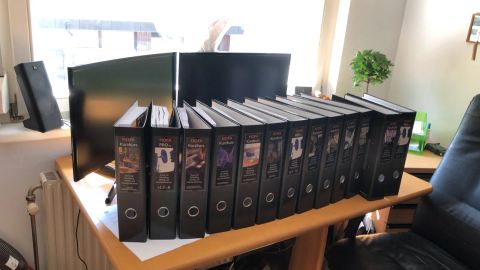
What tips the balance for me is the feedback. 37 detailed analyses of your own mixes and assignments are included in the course, with concrete examples and screenshots. That is three times as many as the runner-up. In my own training, exactly this feedback was the part that helped most, because it shows you mistakes you cannot hear yet. On top of that there are several live workshops a month from the HOFA studios, a forum and a Discord community.
The second point is progression. After the diploma you can add a Bachelor of Science in Creative Media (Audio Engineering) online in around twelve months, awarded by Triagon Academy. No other online provider in the comparison offers such a route. By now I also know it from the other side: for a good five years I have been a lecturer at Triagon Academy myself, supervising students in the first of four modules. So anyone who studies at HOFA and adds the bachelor's degree will sooner or later sit in one of my lectures. Whether the degree works for your plans in Germany, Austria or Switzerland should be checked individually.
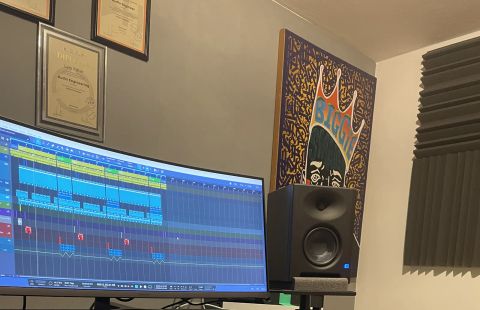
The downsides: because of its extensive course content and services, the diploma is somewhat more expensive than the compact distance courses, and 24 months may sound long at first. This is cushioned by a 14-day money-back guarantee, fair cancellation terms, the option to pause the course and the extended 48-month term with a lower monthly rate. If you just want to try it out first, you do not have to book the diploma straight away: HOFA also offers shorter programmes, AUDIO BASIC (3 months) and AUDIO PRO (12 months), which can later be credited towards the diploma. HOFA currently also includes all of its own plugins and runs attractive promotional offers on top.
A good fit if you want to learn audio engineering seriously and broadly, value a lot of personal feedback and want to keep the option of a bachelor's degree open.
Rank 2: Audiocation Audio Engineer Pro, the lean entry option
The Audio Engineer Pro from Audiocation is the leaner route. Twelve modules in twelve months, around ten hours per week, 2,268 euros in total, cancellable monthly. The course covers the core topics: audio and studio technology, microphone technique, room acoustics, mixing, editing and mastering. In each module you submit a practical assignment and receive written feedback, twelve reviews in total.
It is a solid offer for anyone who wants to find out whether audio engineering will become more than a hobby. For broad training, however, areas such as live sound, game audio or film sound are missing, and there is no route to a bachelor's degree.
To be fair, the right comparison for Audiocation is not the diploma but HOFA's AUDIO PRO. It also runs for twelve months and, according to HOFA, costs 3,024 euros, payable in twelve instalments of 252 euros. For that you get 17 instead of 12 detailed analyses, a more extensive course, all HOFA plugins for the duration of the course and the option to upgrade later to the diploma and the bachelor's degree.
A good fit if you want solid fundamentals on a limited budget and do not want to commit for two years.
Rank 3: MMS Music and Media School, for studio practice on site
The MMS Music and Media School in Inning am Holz is part of my network and follows a different concept from the purely online providers. Theory runs through weekly online lectures and a learning platform, practice through intensive on-site phases in real production studios with at most eight students per studio. Besides the two-year Professional Diploma in audio engineering, there is a one-year certificate and its own bachelor's programmes.
The advantage is clear: you work at professional consoles with real studio equipment, which no online course can replace. The price is less flexibility. You have to travel to Bavaria regularly, which costs time and money from northern Germany, Austria or Switzerland. That is why MMS ranks behind HOFA and Audiocation in a comparison of online training, even though it is strong on the subject.
A good fit if you want hands-on studio experience and can realistically plan the travel.
Rank 4: ILS Digitale Musikproduktion
ILS offers "Digitale Musikproduktion", a ZFU-approved distance course over 14 months at around nine hours per week. ILS only shows the price after an enquiry; the last publicly quoted figure was around 2,100 euros. On the plus side are the four-week trial and a free nine-month extension.
The course, however, is more music production than audio engineering. It relies heavily on Cubase, MIDI, virtual instruments and arranging. Recording and mixing are covered, but in less depth than at HOFA or Audiocation. A course with identical content also runs under the name of the Fernakademie für Erwachsenenbildung, which belongs to the same group.
A good fit if you mainly want to produce your own music on a computer and classic studio technology is secondary.
Rank 5: SAE Institute Audio Engineering Diploma
SAE is the best-known name in the industry and offers the Audio Engineering Diploma over 18 months at ten locations in Germany, from Berlin to Munich. The training is hands-on and takes place on campus with the corresponding studio equipment.
For this comparison, that is exactly the catch: it is not online training. Then there is the price. SAE only publishes a starting rate of 427 euros per month; the exact costs are available after registration. Over 18 months, that puts you above every online option in this comparison.
A good fit if you live near a campus, can learn on site full-time or on fixed days, and have the budget for it.
What an online audio engineering course can and cannot do
An honest word to close: "audio engineer" is not a protected job title, and none of the courses in this comparison leads to a state vocational qualification. ZFU approval confirms the quality of the course and the contract; the certificate itself is a private one. In the audio industry that matters less than it sounds. Whoever books or hires you wants to hear what you can do. Portfolio, references and trained ears count for more there than any title.
If, on the other hand, you need a formal qualification, for instance for the public sector or a later master's degree, think about progression from the start. Here HOFA has a real lead among the online providers with its route to a bachelor's degree. How to weigh a certificate against a degree in general is covered in my article Professional development or degree. An overview of all ways to develop professionally alongside your job is on my page about continuing education.
Good to know
Factor in the equipment. For every online course you need a computer, a DAW, an audio interface and neutral headphones or monitors. Starting from zero, budget a few hundred euros for this. Use the trial period actively: submit an assignment within the first two weeks, then you know how good the feedback really is. Deduct the costs: in Germany, professional development can usually be claimed as income-related expenses; more on this in the article on deducting distance learning costs. Check funding: whether a course can be funded through an education voucher depends on the AZAV approval of the specific programme. How that works is explained in the article on the education voucher.
Conclusion: my winner among online audio engineering courses
If you want to learn audio engineering seriously, broadly and entirely online, it is hard to get past the HOFA Audio Diploma. It is not the cheapest option, but it offers the greatest scope, the most personal feedback and, as the only online course, a route to a bachelor's degree. If you first want to test whether audio engineering is right for you, start shorter with HOFA's AUDIO BASIC or AUDIO PRO, or with Audiocation. If you need studio air on site, look at MMS.
Not sure whether a distance course is enough or whether a degree makes more sense for your goal, for instance in media studies? Then let us clarify that in a free initial consultation.
Frequently asked questions
Which online audio engineering course is the best?
In my comparison, the HOFA Audio Diploma comes first. It is the most comprehensive fully online course, offers the most personal feedback with 37 detailed analyses and is the only online provider with a pathway to a bachelor's degree. If you want a shorter start, look at AUDIO PRO from HOFA or the Audio Engineer Pro from Audiocation, both of which run for twelve months.
How much does an online audio engineering course cost?
The range is wide. Compact distance courses such as Audiocation or ILS cost around 2,100 to 2,300 euros for twelve to fourteen months. The HOFA Audio Diploma starts at 145 euros per month, depending on term and payment method. On-campus training at SAE starts, according to SAE, at 427 euros per month and is considerably more expensive over the full duration.
Is an audio engineering distance course a recognised qualification?
No, not in the sense of a state vocational qualification. Approval by Germany's Central Office for Distance Learning (ZFU) confirms that the course, its teaching and its contract terms have been checked. The certificate itself is a private one. In the audio industry, work samples and references matter more than the paper anyway.
Can I learn audio engineering alongside my job?
Yes, the online providers are designed for exactly that. Depending on the course and your prior knowledge, plan for around 8 to 25 hours per week. The bigger hurdle is usually not time but monitoring: without reasonably neutral headphones or speakers and a quiet room, you will not learn to mix accurately.
Can I earn a bachelor's degree through an online audio engineering course?
At HOFA there is a pathway: after the Audio Diploma, a roughly twelve-month online programme leads to a Bachelor of Science in Creative Media (Audio Engineering), awarded by Triagon Academy. Whether and how such a degree is recognised in your country must be checked individually. MMS offers its own bachelor's programmes in a blended learning format.
Sources
The legal texts and official bodies this article relies on. Links last checked on .
- Section 12 FernUSG: Approval of distance learning courses (in German)German Federal Ministry of Justice, gesetze-im-internet.de
- ZFU register: HOFA AUDIO DIPLOMA (V3), approval number 7432422c (in German)Central Office for Distance Learning (ZFU)
- ZFU register: Audio Engineer Professional, approval number 7222810 (in German)Central Office for Distance Learning (ZFU)
- ZFU register: Digitale Musikproduktion, approval number 7532325 (in German)Central Office for Distance Learning (ZFU)
The information on this page is general in nature and based on my advisory practice (last updated 28.09.2026). It does not replace an official credit transfer or recognition decision by the respective university and is not legal advice. Specific decisions are made by universities, the ZAB (Germany), the BMBWF (Austria), or the SBFI (Switzerland). I clarify binding next steps with you in the initial consultation.
